Table Of Content
- What’s a Knot Anyway?
- Avoid the Cruise Crowds and Travel During Alaska's Shoulder Season
- What Is The Difference Between KNOTS And MILES?
- Alaska Northern Lights Cruises: When to Go and What to Consider
- How is cruise ship speed measured, and how fast is a knot in miles per hour?
- Top Speed of a Cruise Ship – How Fast?
- What is the Conversion of Knots to Miles Per Hour?
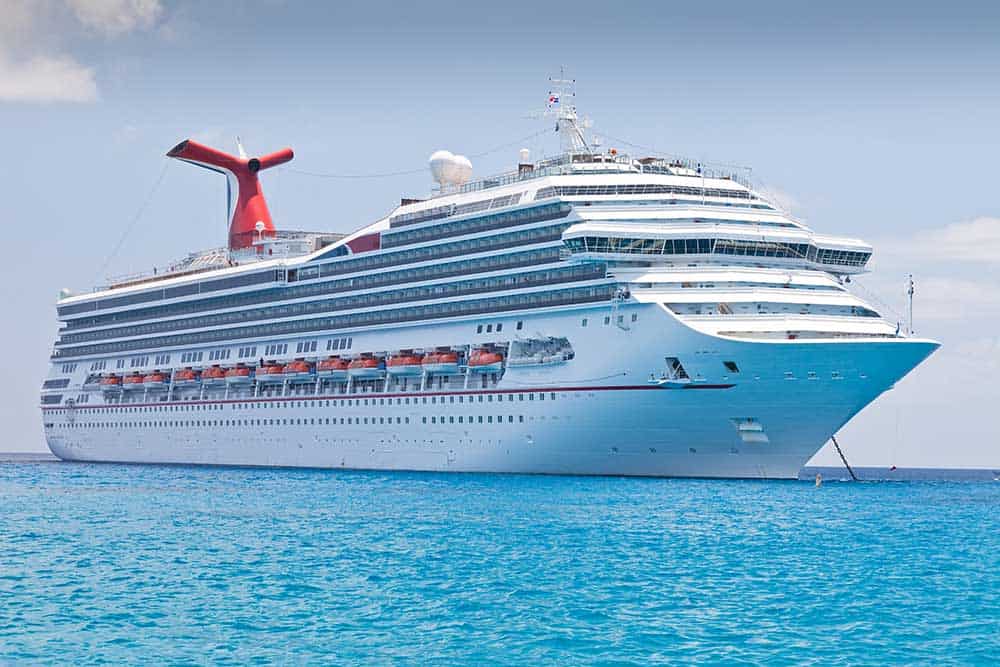
Let’s take a look at three of the fastest cruise ships in the world. However, some vessels from popular cruise lines, such as Carnival and Royal Caribbean, are known to go over 25 knots from time to time. Despite this fast speed, most cruise ships will never even attempt up to 30 knots. But just because these cruise ships CAN travel that fast doesn’t mean they ever do. Usually the cruising speed of one of these massive ships is around knots.
What’s a Knot Anyway?
Without the modern GPS tools and tracking equipment that we have today, sailors had to find other ways to measure their ship’s speed. Have you ever stood on the deck and wondered, “How fast do cruise ships go? By using the Azipods and bow thrusters together, cruise ship captains can easily navigate ports and other tight areas that cruise ships travel. Figuring out how fast cruise ships go goes hand in hand with learning all about cruise ship travel. Exploring how cruise ships operate teaches us all about the speed of a cruise, the differences between ship types, and general marine travel. Unless you’ve undertaken illegal drag racing, the chances are you haven’t.
Avoid the Cruise Crowds and Travel During Alaska's Shoulder Season
What is a world cruise? Here's what sets the months-long voyages apart - USA TODAY
What is a world cruise? Here's what sets the months-long voyages apart.
Posted: Mon, 12 Feb 2024 08:00:00 GMT [source]
Well it really depends what class of cruise ship you are talking about. The 25,000 ton Olympia Voyager (aka Costa Voyager, Voyager, and Grand Voyager and now owned by Bohai Ferry Company) can travel as fast as 27 knots or 31 miles per hour. But 25,000 tons is very small by the standards of today’s cruise ships, and the Voyager is really an ocean liner and not a cruise ship. While speed is essential, passenger comfort is also a priority for cruise lines.
What Is The Difference Between KNOTS And MILES?
Our article on fuel consumption provides a deeper understanding of how fuel usage impacts the maritime industry. In reality, the ship will only travel as fast as it needs to in order to reach the next port by morning. It’s very rare for a cruise ship top speed to be used – in fact, for itineraries visiting ports close to each other, the average speed of cruise ship travel might be much lower.

Average Speed of Cruise Ships
In contrast, to travel on land, the pace of a ship is not expressed in miles per hour. While visibility is obviously reduced in the dark, cruise ships have equipment that means that they can look out for hazards, even in the dark. The QE2 used 380 tons of fuel every day to achieve 29 knots per hour. The large ship carried enough fuel to last 12 days between ports.
Alaska Northern Lights Cruises: When to Go and What to Consider
It’s about harnessing the power of modern vessels and also ensuring smooth sailing with an emphasis on comfort and efficiency. If you’ve ever marveled at the sheer size and majesty of a cruise ship, you may have found yourself wondering just how fast these floating behemoths can go. In this article, we will dive into the fascinating world of cruise ship travel and explore the question of how fast these vessels can actually go. After all, you spend much time on the ship enjoying the amenities. In general, as long as they stick to the itinerary, speed is not an issue. In some places around the world, government regulations require cruise ships to travel at a slow speed.
Is Permanently Living on a Cruise Ship Cheaper Than Your Mortgage? - Reader's Digest
Is Permanently Living on a Cruise Ship Cheaper Than Your Mortgage?.
Posted: Mon, 11 Mar 2024 07:00:00 GMT [source]
Since a nautical mile is equal to 6076 statute miles, one knot represents just shy of 2% of a statute mile per hour. Think of a cruise ship and you likely picture a massive, lumbering vessel that plods slowly along while everyone on board is dancing in a conga line. Life on board is slow and relaxed, as is the ship as it moves from port to port. What started as a yearly vacation with family quickly turned into a passion for travel, cruising and adventure. She even studied abroad on Semester at Sea, sailing the world on a ship while taking courses for college and visiting 4 continents.
Holland America and Princess are the biggest mainstream lines for an Alaska cruise. But you'll also see Alaska itineraries from Carnival, Disney, Norwegian (NCL) and Royal Caribbean, which gives you an array of price points to consider. You'll need to set aside a good chunk of money to spend on shore excursions when you're in Alaska. They can be incredibly expensive when compared to experiences in the Caribbean or Mexico. September offers the best possibility for cruisers to catch the Northern Lights in Alaska. They are generally visible across the state, so any itinerary will likely do, though you'll have the best show in less populated areas like Denali National Park.
Plus, there are all sorts of fun legal and safety constraints. Speed limits in certain areas protect marine life (you wouldn’t want to upset the dolphins, would you?) and help prevent accidents. High speeds guzzle more fuel, which is bad for both the environment and the cruise line’s pocket. Eventually, one “knot” came to equal one nautical mile per hour. A land mile covers 5,280 feet, while a nautical mile covers 6,076 feet — a difference of 15%.
Travel insurance will cover medical expenses as well as loss or theft of personal belongings. Passengers may also note that boats slow in shallow water such as that found close to harbors. This prevents the boat from unexpectedly running into objects at low tide or in shallow seas. In open water, ships often move much faster toward faraway destinations. There’s more room to maneuver in deep water far away from populated areas.
To learn more about what a knot is and how it relates to speed, check out our article explaining how fast a knot is. It is not always the case that cruise ships with faster top speeds have more robust engines. The key to understanding the difference in speed is efficiency. The two units are equivalent for the majority of their respective uses. For instance, if your ship is traveling at a cruising speed of 20 knots, this is equivalent to around 23 miles per hour.
1 knot is equal to 1 nautical mile per hour, or 1.15 mph and 1.852 km/h. Another famous ship from cruising’s golden age, Holland America’s SS Rotterdam (now a floating hotel) cruised from 1958 through the early 2000s. Sea trials aren’t conducted under the same conditions for every ship, so it’s impossible to say which cruise ship could actually go fastest. Therefore, one knot equals about 1/5th of a nautical mile per hour.
Finding the fastest cruise ship isn’t as straightforward as you may think. Cruise ships have better fuel economy at certain speeds, and for both environmental and financial reasons, many cruise liners make fuel savings a priority. So, the speed of a cruise often depends on what is most fuel-efficient. Another time a cruise ship may speed up is if the wind is working against it and inherently slowing it down.
This ocean liner (technically not a cruise ship, but who’s counting?) holds the title for the fastest passenger ship, capable of speeds up to a staggering 30 knots. So far, we’ve discussed how fast cruise ships go (on average), as well as how to measure travel speed in knots. Now let’s take a look at four different factors that affect cruise ship traveling speed. Instead, cruise ships generally travel at an optimized cruising speed.


No comments:
Post a Comment